Thinking about extending your home in Essex but not sure where you stand with planning? You are not alone. It is one of the first questions homeowners ask us, and the honest answer is: it depends. Many extensions do not need full planning permission at all. Others do. This guide explains the difference in plain terms, so you know what is likely to apply to your home before you spend a penny.
The two routes: permitted development and planning permission
Most home extensions fall into one of two routes.
Permitted development means the work is already allowed under national rules, so you do not need to submit a full planning application. There are limits on size and position, but if your project stays within them, you have an automatic right to build.
Planning permission is needed when your project goes beyond those limits, or when your property sits somewhere with extra protection. Here you submit an application to your local council, who decide whether to approve it.
Knowing which route applies is the single most useful thing to work out at the start. It shapes your design, your timescale, and your budget.
What you can usually do under permitted development
The figures below are a general guide for a typical house in England. They are not the full set of rules, and they do not apply to flats, maisonettes, or listed buildings. Your own home may have tighter limits, so treat this as a starting point rather than a green light.
Rear extensions. A single-storey rear extension can often be built under permitted development. As a rough guide, that is up to 3m deep for a semi-detached or terraced house, and up to 4m for a detached house. The maximum height is usually around 4m.
Larger rear extensions. You can sometimes go deeper, up to 6m for a semi or terrace and 8m for a detached house, under a route called Prior Approval. This is not full planning, but you do have to notify the council and your neighbours first. More on that below.
Side extensions. A single-storey side extension is usually allowed if it is no more than 4m high and no wider than half the width of the original house.
Two-storey extensions. These have stricter rules. A two-storey rear extension must not extend more than 3m beyond the original rear wall, and must sit at least 7m from the rear boundary.
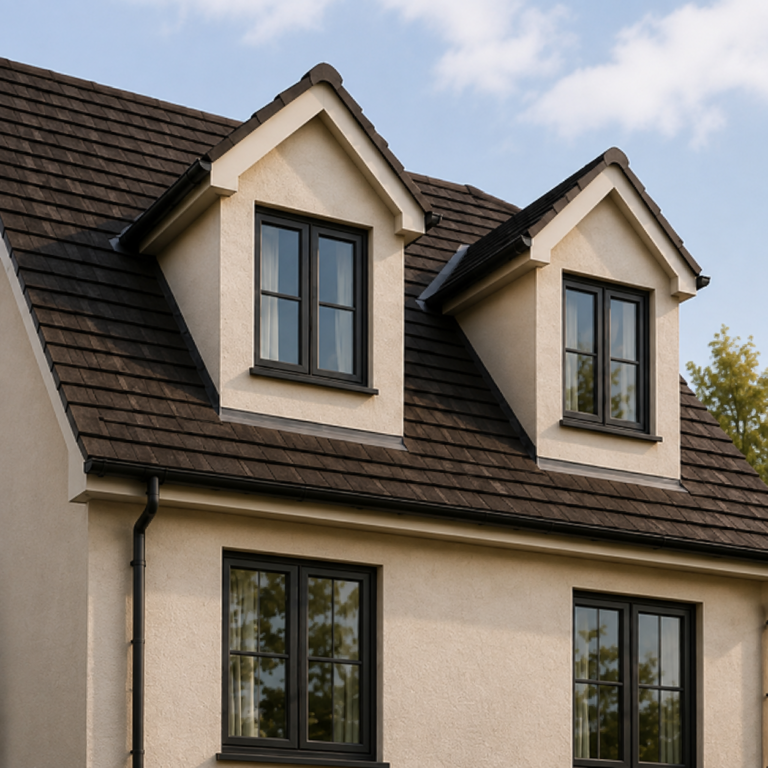
Loft conversions. Many lofts can be converted under permitted development, within a volume allowance of around 40 cubic metres for a terrace and 50 cubic metres for a semi or detached house. Dormers to the front of the house usually need planning permission.
If your plans fit inside these limits, you may not need a planning application. But you should still prove it, which we cover shortly.
When you do need full planning permission
You will usually need to apply for planning permission if:
- Your extension is bigger than the permitted development limits.
- You live in a conservation area, which is common in Essex villages and parts of Chelmsford.
- Your home is a listed building.
- You live in a flat or maisonette, which do not have the same rights as houses.
- Your permitted development rights have been removed. This happens on some newer estates, and through something called an Article 4 direction.
If any of these apply, do not worry. It simply means your project takes the planning route, which thousands of Essex homeowners do successfully every year. Good design and a well-prepared application make a real difference to the outcome.
Permitted development still needs paperwork
This is the part people most often miss. Even when your extension is allowed under permitted development, it is well worth applying for a Lawful Development Certificate.
This is a document from the council confirming, in writing, that your project did not need planning permission. It is not the same as a planning application, and it is usually simpler to obtain. But it protects you. When you come to sell your home, buyers and their solicitors will ask for proof that the work was lawful. Without a certificate, a sale can stall. Spending a little now saves a lot of stress later.
The larger home extension route (Prior Approval)
If you want a deeper single-storey rear extension, up to 6m or 8m as above, there is a halfway route called Prior Approval, also known as the larger home extension scheme.
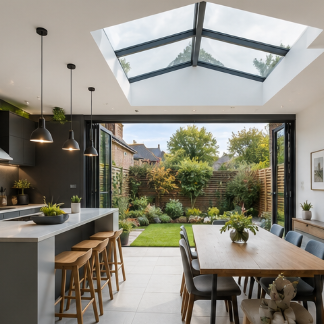
You do not submit a full planning application, but you do tell the council about your plans, and they notify your immediate neighbours. If a neighbour objects, the council considers the impact on them before deciding. If nobody objects, the work can usually go ahead. It is a useful option for families who want a generous open-plan kitchen without the longer planning route.
Planning permission is not the same as building regulations
A common mix-up. These are two separate things, and most extensions need both.
Planning permission is about whether you are allowed to build, considering size, appearance, and the effect on neighbours and the area.
Building regulations are about how you build, covering structure, insulation, fire safety, and drainage. Even a permitted development extension that needs no planning application must still meet building regulations. The two run alongside each other.
What this means in Essex and Chelmsford
Essex is not covered by one single set of local rules. Chelmsford City Council, Brentwood, Maldon, Epping Forest, and the other districts each interpret planning policy in their own way, and each has its own conservation areas and local plans. A project that is straightforward in one part of Essex may need more care in another.
Green belt land and conservation areas are common across the county, particularly in the villages around Chelmsford such as Writtle, Great Baddow, and Danbury. These bring extra restrictions, but they are not a dead end. They simply call for a design that respects the setting, and an application prepared with the local policies in mind.
How we can help
At Connor Ferris Architects, we assess your property at the very start and tell you honestly which route your project falls under, whether that is permitted development, Prior Approval, or full planning permission. We then prepare the drawings and the application, and guide you through to approval.
Getting this right early avoids the most expensive mistake in any extension: designing something, only to find it does not fit the rules. A short conversation at the beginning can save months later.
Frequently asked questions
Do I always need planning permission for an extension in Essex? No. Many single-storey rear, side, and loft extensions fall under permitted development and need no full application. Larger projects, and homes in conservation areas or listed buildings, usually do need permission.
How long does planning permission take? A householder application usually takes around eight weeks for the council to decide, once it has been submitted. Preparing the drawings and documents beforehand takes a little longer, which is why starting early helps.
Do I need planning permission if my extension is under permitted development? No, but you should still apply for a Lawful Development Certificate to prove the work was lawful. It protects you when you sell.
Can I extend a listed building or a home in a conservation area? Often yes, but it needs planning permission, and sometimes listed building consent as well. The design has to respect the character of the building and the area.
Is planning permission the same as building regulations? No. Planning permission decides whether you can build. Building regulations control how it is built. Most extensions need both.
Thinking about extending your home in Essex?
If you are planning an extension in Chelmsford or anywhere across Essex, we would be glad to help you work out the right route and design something you will love. Book a free consultation and we will talk through your ideas and the planning options for your home.
Get in touch to book your free consultation.