If you are considering extending your home in Essex, you are not alone. With rising property prices, high stamp duty, and limited housing supply, many homeowners in Chelmsford, Billericay, Brentwood, Colchester, and across the county are choosing to improve rather than move!
A well-designed home extension can transform how you live, increase your property’s value, and future-proof your home for growing families.
At Connor Ferris Architects, we specialise in residential extensions, loft conversions, and bespoke home improvements across Essex and the South East. This guide explains everything you need to know before starting your project.

Why Extend Your Home Instead of Moving?
Extending your home offers several key advantages:
- Avoid stamp duty, estate agent fees, and moving costs
- Stay in the area you already love
- Create spaces tailored to your lifestyle
- Increase your property’s market value
- Improve energy efficiency and comfort
For many Essex homeowners, an extension represents better long-term value than relocating.
Popular Types of Home Extensions in Essex
Rear Extensions
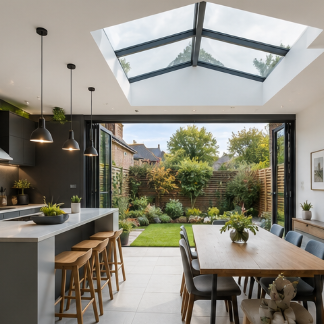
Rear extensions are particularly popular for Victorian, Edwardian, and post-war homes. They are ideal for creating open-plan kitchen, dining, and living spaces with strong garden connections.
Typical features include:
- Large sliding or bifold doors
- Rooflights and lanterns for natural daylight
- Open-plan family layouts
- Integrated utility and WC spaces
Side Return Extensions
Side return extensions make use of underutilised side access, commonly found in period properties. When combined with rear extensions, they form highly efficient L-shaped layouts.
Double-Storey Extensions
Double-storey extensions provide additional bedrooms and bathrooms while maximising the available footprint. They are ideal for growing families seeking long-term flexibility.
Loft Conversions
Loft conversions are one of the most cost-effective ways to add space. They are commonly used for master suites, home offices, and guest bedrooms, and often deliver excellent returns on investment.
Do You Need Planning Permission in Essex?
Many home extensions fall under Permitted Development rights, meaning formal planning permission may not be required. This depends on:
- Extension size and height
- Property type
- Conservation area status
- Previous alterations
We always recommend professional advice and, where appropriate, obtaining a Lawful Development Certificate for legal certainty.
Building Regulations and Compliance
All extensions must comply with Building Regulations, covering:
- Structural safety
- Thermal performance
- Fire safety
- Drainage and ventilation
- Accessibility
Our team prepares detailed Building Regulations drawings and manages compliance through to approval.
How Much Does a Home Extension Cost in Essex?
Indicative construction costs in 2026 typically range from:
- Single-storey extension: £2,200 to £3,000 per m²
- Double-storey extension: £2,000 to £2,700 per m²
- Loft conversion: £1,800 to £2,500 per m²
Professional fees, surveys, and VAT should also be budgeted. We provide early-stage cost guidance so clients can plan realistically from the outset.
Our Design Process
We follow a structured, client-focused approach:
- Initial consultation and feasibility review
- Measured survey and site analysis
- Concept design and layout options
- Planning application (if required)
- Technical and Building Regulations drawings
- Tender support and construction advice
Clients also receive access to our digital project portal for document management and progress tracking.
Sustainability and Energy Efficiency
Modern extensions present an opportunity to improve environmental performance. We regularly incorporate:
- High-performance insulation
- Airtight construction methods
- Low-energy glazing
- Renewable technologies
- Sustainable materials
These measures reduce running costs and improve long-term comfort.
Why Choose Connor Ferris Architects?
- Extensive experience in residential projects across Essex
- Strong local planning authority knowledge
- In-house Principal Designer (CDM 2015) services
- Transparent fee structures
- Personal, hands-on service
- Proven track record of delivering high-quality homes
Frequently Asked Questions
How long does an extension project take?
Most projects take between 6 and 12 months from initial design to completion, depending on complexity and approvals.
Will my home increase in value?
Well-designed extensions typically add between 10 and 25 percent to property value, depending on location and specification.
Can I live in my home during construction?
In many cases, yes. We advise clients on phasing and contractor selection to minimise disruption.
Start Your Home Extension Project in Essex
If you are considering a home extension in Essex, our team would be delighted to help.