Extension Rules, Planning Permission and What Homeowners Need to Know
If you are planning a home extension, loft conversion, garage conversion or renovation in Essex, you may be able to build without applying for full planning permission.
This is known as Permitted Development (PD).
Permitted Development rights allow certain building works to be carried out without a full planning application, provided the proposal meets specific size, height and design rules set out in national planning legislation.
Many homeowners across Chelmsford, Brentwood, Basildon, Braintree, Maldon, and the wider Essex area successfully extend their homes using Permitted Development.
However, the rules can be complex, and mistakes can lead to enforcement problems or complications when selling your property.
This guide explains:
- What Permitted Development is
- What size extensions you can build without planning permission
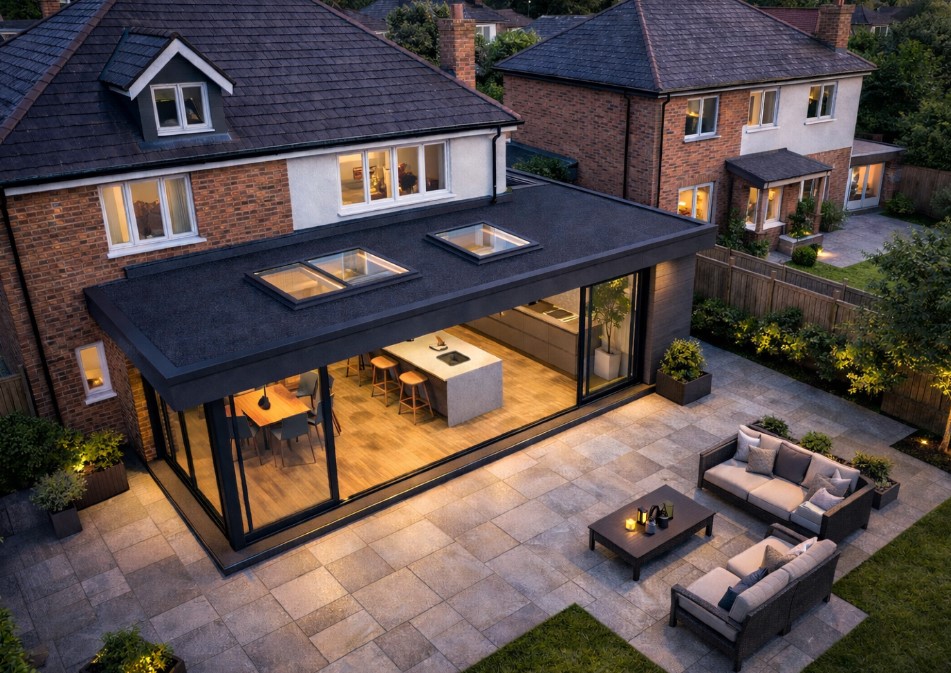
- Permitted Development rules for rear extensions
- Loft conversion permitted development limits
- When planning permission is still required
- Why you should apply for a Lawful Development Certificate
- How an architect can help with a Permitted Development project
What Is Permitted Development?
Permitted Development rights are a set of national planning rules that allow homeowners to make certain changes to their property without submitting a full planning application to the council.
These rights apply to many houses throughout England, including properties across Essex and Greater London.
Typical works allowed under Permitted Development include:
- Single storey rear extensions
- Side extensions
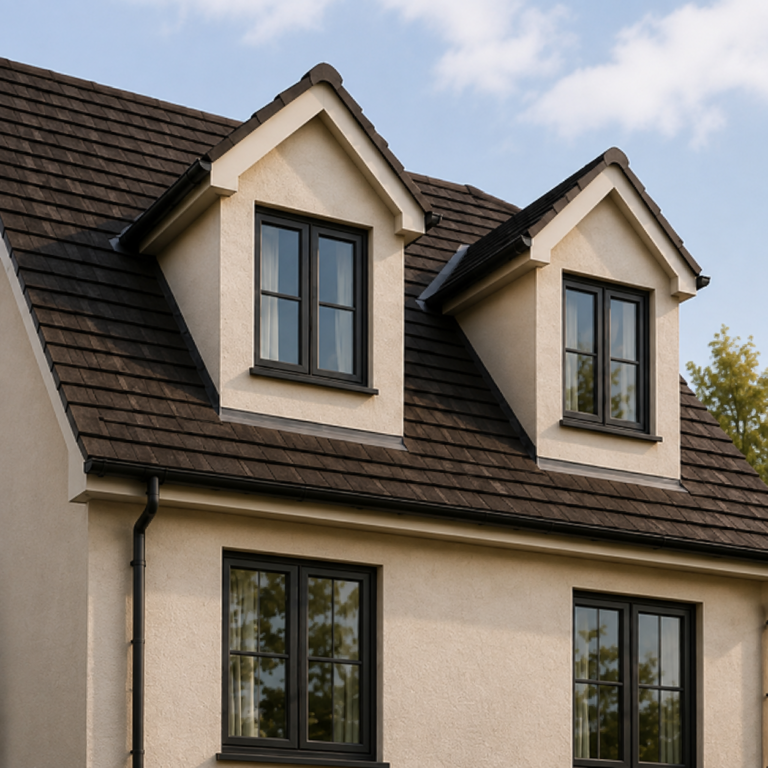
- Loft conversions and dormer extensions
- Garage conversions
- Garden rooms and outbuildings
- Roof alterations and rooflights
- Internal structural changes
However, these works must comply with strict limitations on size, height and location.
Permitted Development rights apply to the original house, meaning the building as it existed when first constructed or as it stood on 1 July 1948.
Previous extensions may reduce the amount of development still allowed under PD rights.
Rear Extension Permitted Development Rules
One of the most common questions homeowners ask is:
“Can I build a rear extension without planning permission?”
In many cases, the answer is yes, provided the extension falls within the Permitted Development limits.
Standard Rear Extension Limits
Detached houses
Maximum 4 metres from the original rear wall.
Semi-detached and terraced houses
Maximum 3 metres from the original rear wall.
The extension must also meet additional rules:
- Maximum height of 4 metres
- Eaves height no higher than the existing house
- Materials similar to the existing house
- No more than 50% of the garden area covered by buildings
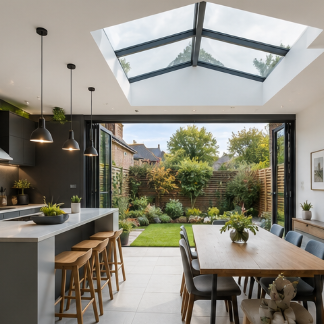
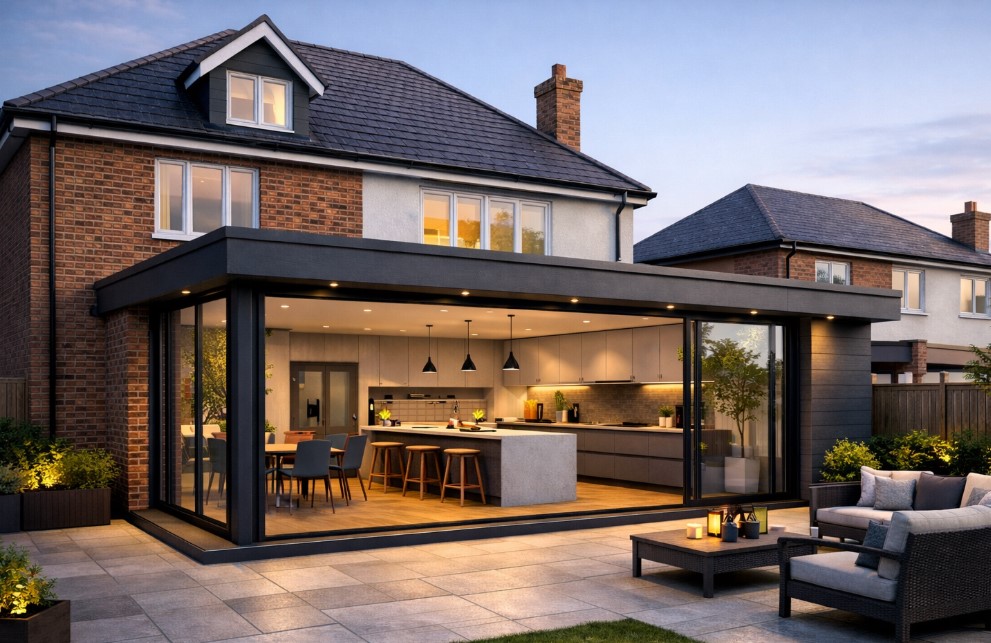
These limits apply to many homes across Essex and are commonly used for kitchen extensions and open plan living spaces.
Larger Home Extensions (Prior Approval)
Under the Neighbour Consultation Scheme, larger extensions can sometimes be built under Permitted Development using a process called Prior Approval.
Maximum extension sizes:
Detached houses
Up to 8 metres
Semi-detached and terraced houses
Up to 6 metres
However, this requires submitting a Prior Approval application to the local planning authority.
The council will notify neighbouring properties, who have the opportunity to comment on the proposal.
If no objections are received or the council approves the design, the extension can proceed without full planning permission.
This route is widely used for large rear kitchen extensions across Essex.
Side Extensions Under Permitted Development
Side extensions are also possible under Permitted Development, but the rules are more restrictive.
Requirements include:
- The extension must be single storey
- Maximum width no more than half the width of the original house
- Maximum height 4 metres
- Must not extend beyond the front elevation of the house
Side extensions are commonly used to enlarge kitchens or create utility rooms and additional living space.
Loft Conversion Permitted Development Rules
Many loft conversions in Essex can be carried out without planning permission.
The permitted development limits are based on the additional roof volume created.
Maximum roof volume allowed:
Terraced houses
40 cubic metres
Detached or semi-detached houses
50 cubic metres
Other important rules include:
- Dormer windows must not extend beyond the plane of the roof facing the highway
- Materials must be similar to the existing roof
- Side windows must be obscure glazed
- The extension must not exceed the height of the existing roof
Loft conversions are one of the most cost-effective ways to add bedrooms or home offices.
Outbuildings and Garden Rooms
Garden buildings can also fall under Permitted Development.
Examples include:
- Garden offices
- Home gyms
- Garden studios
- Workshops
Typical rules include:
- Maximum height 2.5 metres near boundaries
- Must be located behind the main house
- Must not cover more than 50% of the garden
Garden offices have become increasingly popular across Essex as more people work from home.
When Planning Permission Is Required
Permitted Development does not apply in every situation.
Planning permission may still be required if:
The property is a flat or maisonette
The property is listed
The property is located in a conservation area
The council has removed Permitted Development rights through an Article 4 Direction
The proposal exceeds the Permitted Development limits.
Many homes in historic areas or designated landscapes have additional restrictions.
Lawful Development Certificates Explained
Even when a project qualifies as Permitted Development, it is strongly recommended to apply for a Lawful Development Certificate (LDC).
An LDC is a formal document issued by the council confirming that the development is lawful and does not require planning permission.
Benefits of obtaining a Lawful Development Certificate include:
- Legal confirmation that the extension complies with planning law
- Protection against enforcement action
- Essential documentation when selling your property
- Greater confidence for builders and contractors
Most conveyancing solicitors request this certificate during the property sale process
Common Permitted Development Mistakes
Homeowners often assume their project falls under Permitted Development, but small mistakes can invalidate PD rights.
Common issues include:
Incorrect measurement from the original house
Building too close to a boundary
Exceeding height restrictions
Using materials that do not match the existing house
Overlooking previous extensions
These issues can result in enforcement notices or costly redesign work.
Professional architectural advice can help avoid these problems.
Permitted Development in Chelmsford and Essex
Although Permitted Development rules are set nationally, interpretation and enforcement can vary between local councils.
Local planning authorities in Essex include:
Chelmsford City Council
Brentwood Borough Council
Basildon Council
Maldon District Council
Braintree District Council
Epping Forest District Council
Working with an architect who understands local planning policies and council processes can significantly improve the success of a project.
Do You Need an Architect for Permitted Development?
While Permitted Development removes the need for full planning permission, professional design is still essential.
An architect can help with:
Feasibility studies and site analysis
Design development and layout optimisation
Preparing drawings for a Lawful Development Certificate
Building regulations drawings
Construction information for builders
Well designed extensions can dramatically improve both living space and property value.
Permitted Development Architects in Essex
Connor Ferris Architects work with homeowners throughout Essex to design extensions, loft conversions and renovations under Permitted Development rules.
Our services include:
Initial design consultations
Feasibility assessments
Planning drawings and applications
Lawful Development Certificates
Building regulations drawings
Construction stage support
We have successfully delivered residential projects across Chelmsford, Brentwood, Maldon, Basildon and surrounding areas.
Book a Free Consultation
If you are considering a home extension, loft conversion or renovation project, we would be happy to help.
Our architects can assess your property and advise whether your proposal qualifies under Permitted Development.
Contact Connor Ferris Architects today to arrange a consultation and begin exploring the potential of your home.